How To Build A Household Emergency Binder With Key Documents Contacts And Access Plans
Introduction
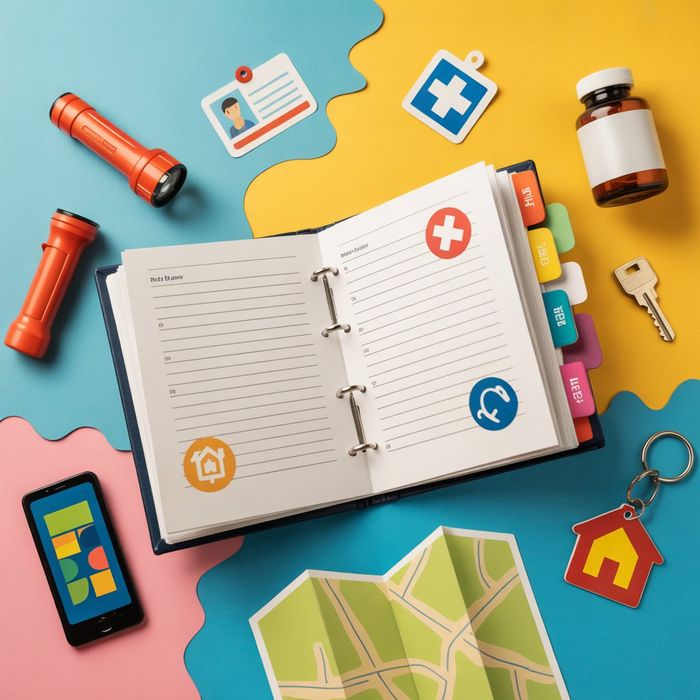
Emergencies often occur with little warning, disrupting communication, access to records, and the ability to make timely decisions. When power outages, medical issues, natural events, or unexpected travel situations arise, having quick access to essential information becomes critical. A household emergency binder serves as a centralized, organized collection of documents, contacts, instructions, and references that support clarity during uncertain moments. It does not depend on internet access or charged devices, making it reliable in situations where digital tools cannot be used. This guide explains how to build a comprehensive binder, describes key components, outlines structural organization, and provides practical examples to help households create a resource that increases preparedness and reduces stress during critical events.
Key Components Explained
A strong emergency binder includes several categories of information. Each category plays a different role in supporting household preparedness.
Identification Records
Copies of identification documents help confirm identity when primary documents are inaccessible. This may include identification cards, birth documents, and relevant household documentation.
Medical Information
Medical summaries provide quick reference for allergies, medications, medical conditions, and physician contacts. These details assist in urgent situations where rapid decisions are needed.
Household and Financial Records
These documents help maintain continuity during disruptions. They may include insurance summaries, basic property details, warranty notes, and simplified financial references relevant to emergency communication.
Emergency Contacts
A structured contact list includes numbers and addresses for family, neighbors, schools, workplaces, health providers, and utility companies.
Access Instructions
Clear instructions describe how to reach or operate essential household systems, including water shutoff valves, circuit breakers, and safety equipment locations.
Action Guides
Short guides summarize what to do during specific situations such as evacuation, sheltering at home, or contacting local authorities.
Structural Breakdown of Document Categories
Organizing the binder into sections makes navigation faster when time is limited.
Section 1: Individual Profiles
Each household member may have a profile that includes copies of identification, medical summaries, and relevant emergency needs.
Section 2: Household Systems
This section may contain diagrams or written instructions for accessing and operating utilities, safety controls, and essential home systems.
Section 3: Insurance and Essential Records
Insurance summaries, major appliance details, warranty information, and simplified financial overviews appear here.
Section 4: Emergency Procedures
This section outlines step-by-step procedures for dealing with different types of emergency situations.
Section 5: Contact Directory
Contacts are organized by category to support rapid communication.
Section 6: Supplemental Materials
Maps, checklists, household inventories, and additional guidance may be stored here.
This structure keeps the binder intuitive and easy to use under pressure.
Step-by-Step Practical Framework for Assembling the Binder
Step 1: Choose a Binder Format
Select a binder that is sturdy and large enough to hold documents securely. Page protectors or dividers can improve organization.
Step 2: Collect Essential Documents
Gather identification copies, medical summaries, insurance materials, and key household records.
Step 3: Sort Information by Category
Assign each document to the appropriate section. Remove duplicate or outdated materials.
Step 4: Add Labels and Tabs
Use clear labels so sections are easily visible. This supports fast navigation during stressful situations.
Step 5: Document Household Systems
Provide written instructions and, if helpful, simple diagrams for important systems such as water valves or electrical breakers.
Step 6: Build the Contact Directory
List contacts in categories and include multiple communication methods when possible.
Step 7: Add Action Guides
Include brief summaries of how to respond to common emergency situations.
Step 8: Choose a Storage Location
Store the binder in an accessible but secure location that can be reached quickly when needed.
Step 9: Review and Update Regularly
Schedule periodic reviews to replace outdated information and confirm accuracy.
This framework ensures the binder remains functional and reliable.
Practical Examples
Example 1: Medical Emergency
A household member experiences a health issue. The binder provides immediate reference to allergies, medications, and relevant medical details when time is limited.
Example 2: Power or Utility Failure
A disruption affects electricity or water systems. The binder includes instructions for locating and operating home controls safely.
Example 3: Sudden Evacuation
A situation requires rapid departure from home. The binder contains essential documents and contact details needed during relocation.
Example 4: Communication Disruption
Digital tools become unavailable. The binder offers offline access to phone numbers, addresses, and action guidelines.
These examples show how the binder supports decision making and communication.
Preparation Checklist
- Copies of personal identification
- Medical summaries for each household member
- Insurance and property overviews
- Emergency contact lists
- Instructions for household utilities
- Quick reference action guides
- Maps and access details
- Household inventory lists
- Binder stored in an accessible location
- Regular updates to maintain accuracy
Comparison Table: Physical Binder vs Basic Digital Backup
| Feature | Physical Binder | Basic Digital Backup |
|---|---|---|
| Accessible without electricity | Yes | No |
| Vulnerability to physical damage | Moderate | Moderate |
| Portability | Moderate | High |
| Ease of updating | Moderate | High |
| Dependence on external systems | None | Requires device access |
Troubleshooting and Maintenance
A binder can accumulate outdated information if not reviewed periodically. Establish a routine for checking insurance renewals, replacing expired documents, updating contact lists, and revising instructions when household systems change. Store the binder in a location that balances accessibility with protection from environmental risks.
Risk and Limitation Notes
A physical binder may be exposed to damage, loss, or theft. Sensitive information must be handled carefully to reduce privacy risks. While comprehensive, an emergency binder cannot cover every possible event. It serves as a structured support tool rather than a complete solution for all emergency scenarios.
Summary
A household emergency binder organizes essential documents, contacts, and instructions into a single reliable resource that improves preparedness during uncertain events. By selecting key materials, organizing them into clear sections, and maintaining regular updates, households gain a practical tool that supports faster decisions and better coordination. A well designed binder provides stability and clarity when normal routines are disrupted.
Informational Disclaimer
This guide provides general educational information on building a household emergency binder. It is not a substitute for professional emergency planning or specialized preparedness services.
By InfoStreamHub Editorial Team - December 2025